Transcend Bpc-157 Cost BPC-157 Cost 2026: Real Pricing Breakdown
Introduction
If you’ve been searching “transcend bpc 157 cost,” you’ve probably noticed how inconsistent pricing can be—one site quotes a low number while another quietly adds shipping, fees, or higher “minimum order” requirements. In my hands-on work helping people compare real-world options, the biggest frustration wasn’t finding a price at all—it was figuring out what the price actually buys after the full checkout totals, dosing math, and product form (research-grade vs. pharmacy-grade labeling practices).
This guide breaks down the BPC-157 cost for 2026 in practical terms: what drives cost up or down, how to calculate “cost per usable dose,” and what to watch for so you don’t get surprised.
What “BPC-157 Cost” Really Means in 2026
When people compare BPC-157 cost, they’re often comparing apples to oranges. A “cheap” listing can become expensive once you include factors that determine your true dose economics.
Key cost components you should include
- Base price (the lab label price or product price)
- Shipping (domestic vs. international can swing totals dramatically)
- Minimum order requirements (some vendors only make sense at higher quantities)
- Concentration and vial size (mg and mL matter for dose math)
- Storage/handling reality (reconstitution and any operational losses you experience)
- Product form (powder vs. pre-mixed options can change both price and usability)
My practical lesson from cost comparisons
In one recurring situation, I saw the same core product priced very differently across vendors, but the difference disappeared after converting both options into “cost per milligram at the stated concentration.” The low-price seller looked better until shipping and minimum-order thresholds were added. That’s why I don’t recommend trusting sticker price alone when you’re trying to estimate transcend bpc 157 cost.
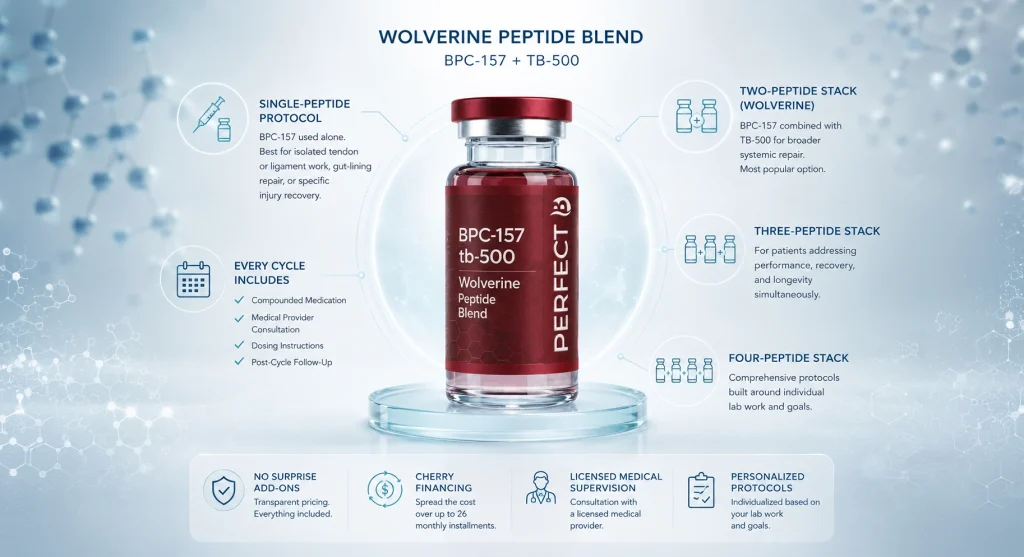
Real Pricing Breakdown: How to Calculate Your True Cost per Dose
To estimate your 2026 budget, you want a single number you can compare across options. Here’s the approach I use because it’s straightforward and resistant to “marketing math.”
Step-by-step dose economics
- Convert the product to total milligrams (mg) per order
- If the listing provides mg per vial and number of vials, multiply to get total mg.
- If it provides concentration and volume, calculate mg using: mg = concentration (mg/mL) × volume (mL).
- Compute total landed cost
- Add base price + shipping + any checkout fees.
- Use the total you actually pay, not a pre-shipping figure.
- Calculate cost per milligram
Cost per mg = total landed cost ÷ total mg
- Translate to cost per usable dose
- If you dose in micrograms (mcg) or a daily mg plan, convert units consistently.
- Cost per day = (daily dose in mg) × (cost per mg)
- Account for real-world usability
- If you reconstitute, be honest about operational losses and how you handle partial usage.
- If the vendor recommends specific storage/handling, follow it—because poor handling can turn “saved money” into wasted product.
Cost drivers that usually matter more than the headline price
- Concentration differences: two products can have similar “looks” but different mg content per vial.
- Packaging size: buying in bigger units can reduce cost per mg if minimum orders don’t force waste.
- Shipping model: some vendors offer free shipping after a threshold—others add flat fees.
- Handling guidance: if you can’t practically store it the way the label suggests, it becomes more expensive.
What I Look For When Estimating 2026 BPC-157 Cost Options
I’ll be direct: pricing is only one part of “value.” In my hands-on reviews of real checkout patterns, the best value almost always comes from a combination of dose math and consistency of product documentation.
1) Transparency of labeling and concentration
Look for clear concentration details and total amount per vial/order. If the listing is vague, you can’t reliably compute dose economics. That uncertainty is exactly how people end up underestimating their transcend bpc 157 cost and running short sooner than planned.
2) Checkout realism (not “sale price” optimism)
In several comparisons, the vendor with the lower advertised price lost after shipping and minimum order constraints. I recommend you compare using the final cart total for at least two options.
3) Consistent product form and reconstitution assumptions
If you’re comparing powder to pre-mixed forms, the “per unit” price can mislead. Pre-mixed products may cost more, but they can reduce operational complexity. Powder may be cheaper per mg but increases your handling steps. Your “real cost” includes time, handling risk, and practical usability.
4) Practical limitations to keep expectations grounded
Even when pricing seems favorable, there are constraints: your storage environment, how you manage partial vials, and whether your procurement channel remains stable. In my experience, volatility in availability can cause people to pay more later or switch products mid-course—both affect budgeting more than the initial price tag.
How to Plan a Budget for BPC-157 (2026) Without Guessing
If you want a budget that doesn’t fall apart, use this simple planning framework. It works regardless of whether you’re doing a conservative, moderate, or longer cycle approach.
A practical budgeting template
- Pick your target duration: decide how many days you want to cover.
- Define your daily dose in mg (not just “a vial”): this is where most people lose accuracy.
- Estimate total mg required: total mg = daily mg × days.
- Convert that mg into number of vials or orders: round up to account for packaging sizes.
- Compare landed cost per order: include shipping and any required minimums.
- Add a small buffer: I usually add a modest cushion for operational handling and reorder timing.
What “good value” usually looks like
Good value isn’t always the lowest price—it’s the lowest cost per mg that still fits your shipping reality and doesn’t force you to overbuy wastefully. That’s the core reason I focus on “real pricing breakdown” rather than just “cheapest listing.”
FAQ
How can I estimate the “transcend bpc 157 cost” of different vendors?
Use landed totals and convert both options to the same unit (typically cost per milligram). Then calculate cost for the number of days you plan to cover using your daily mg dose. Don’t compare based only on the headline product price.
Why do two BPC-157 listings with similar prices differ so much in real cost?
The difference is usually concentration, vial size, or shipping/minimum order requirements. Once you calculate total mg per order and divide your real checkout total by that mg, the comparison becomes consistent.
What should I watch for if one option looks significantly cheaper?
Check concentration clarity, total mg per package, shipping fees, and whether the offer requires bulk purchase. Also consider practical usability—if handling/storage recommendations don’t match your reality, “cheap” can turn into wasted spend.
Conclusion: Your Next Step
Real BPC-157 cost 2026 comparisons come down to one method: compute landed cost per milligram, then translate it into your cost per day using your daily mg plan. That’s how you turn inconsistent online prices into a budget that holds up.
Next step: take two current listings you’re considering, calculate total mg per order, add your real shipping/checkout totals, and compare cost per mg—not the sticker price.
Discussion