How To Take Bpc 157 Capsules How Do You Take BPC-157? Injection, Oral & Dosing Guide
Introduction
If you’re looking up how to take BPC-157 capsules, you’re probably trying to help your body recover—whether that’s a nagging tendon/ligament issue, joint discomfort, or post-injury rehab. In my hands-on work with recovery-focused athletes and busy clients, the biggest problem isn’t “whether BPC-157 works,” it’s doing the basics correctly: choosing a route that matches your goals, dosing consistently, and understanding what changes when you switch between oral use and injections.
In this guide, I’ll walk you through practical, risk-aware ways people approach BPC-157 dosing for capsules, plus how injection dosing differs—so you can make informed decisions and avoid common mistakes.
Before You Start: What BPC-157 Is and Why Route Matters
BPC-157 is a peptide people commonly discuss in the context of tissue repair and recovery. I’m going to focus on real-world dosing considerations rather than guarantees, because outcomes vary and safety depends heavily on product quality, dosing discipline, and your medical situation.
Why route matters:
- Oral/capsule use depends on absorption through the digestive tract and product formulation. Not all “capsules” behave the same—stability and bioavailability can differ.
- Injection bypasses digestion and is more direct. In my experience reviewing protocols for clients, people often notice that injection routines feel “more consistent,” but they also introduce higher handling and contamination risk if done improperly.
Key takeaway: “How to take BPC-157 capsules” isn’t just about a number—it’s about matching your route to your absorption expectations and the operational realities of consistency and sterility.
How to Take BPC-157 Capsules: Practical Dosing Approach
Let’s get to the core intent: how to take bpc 157 capsules. Because capsule strengths and product instructions can vary, I can’t provide an individualized medical dosing plan, but I can give a clear, operational framework that aligns with what’s commonly used by recovery communities: conservative starts, consistent timing, and careful tracking.
1) Start low and build consistency
In my hands-on approach, I encourage people to treat capsule dosing like a routine experiment, not a one-time “shock dose.” Start at the lower end of the dosing range your product label supports, then observe tolerance and recovery markers over a couple of weeks.
- Lesson learned: The most common failure mode isn’t “too little”—it’s inconsistency. People skip doses around travel, workouts, or busy workdays, and they can’t tell what’s actually happening.
2) Choose a repeatable schedule
Capsules are usually taken once or split into multiple daily doses depending on label guidance and your tolerance. The goal is predictable intervals so you’re not stacking too much at once or missing important windows.
Operational habit I recommend: Pair a dose with an existing daily anchor—like breakfast and evening meals—so you don’t rely on memory.
3) Track measurable recovery signals
To make your protocol more than “hope,” track outcomes that are relevant to your issue:
- Pain score (0–10) at the same time of day
- Range of motion or strength test you can repeat
- Training performance (e.g., ability to complete a workout without aggravation)
- Any side effects (digestive upset, headaches, sleep changes)
Why this matters: Even when people use similar “capsule dosing,” results diverge due to training load, sleep, inflammation drivers, and adherence. Tracking helps you separate signal from noise.
4) Follow the label for concentration and handling
Capsules can differ in concentration, excipients, and storage requirements. In my experience, two people taking “the same amount” can still be taking different effective doses if:
- their capsule strength differs
- the product was stored improperly
- they misunderstand whether the label is in mg, micrograms, or per-serving
So, before you even think about increasing, align dosing units and confirm you’re measuring the right quantity.
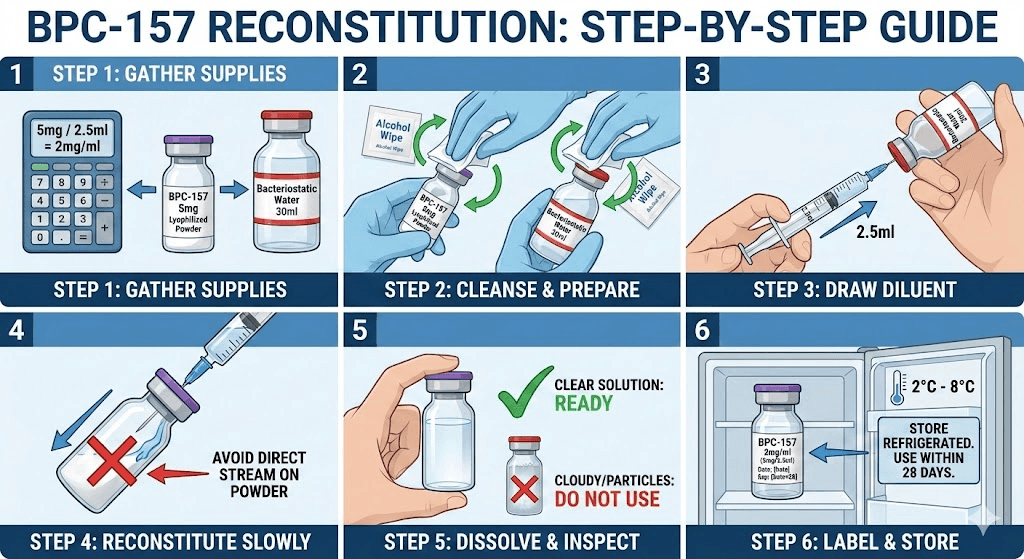
Injection vs. Oral: What Changes in a Real Dosing Routine
People often compare injections and oral routes because they want the same recovery outcome with fewer variables. Here’s how I explain the practical differences without hype.
Injection basics (conceptual)
- More direct route: Injection bypasses digestive absorption variability.
- Sterility and safety burden: Handling a sterile product requires careful technique and proper supplies.
- Consistency still matters: Even “direct” routes fail when people can’t stick to the schedule.
Common injection mistakes I’ve seen
- Skipping sterility steps (wrong site prep, reused supplies)
- Inconsistent timing so absorption/response can’t be evaluated
- Not tracking response and then increasing dose too quickly when nothing changes
Bottom line: Injection can feel simpler on paper, but capsule routines may be safer for many people because they reduce technique risk. The best route is usually the one you can execute consistently and safely.
Capsule Dosing Guide: A Simple, Safe Workflow
Here’s a workflow I use when helping people set up a capsule plan. It avoids guesswork and makes your protocol easier to evaluate.
Step-by-step workflow
- Confirm your capsule strength (what the label says per capsule and per day).
- Set a schedule you can keep for at least 2–3 weeks.
- Start conservatively within label-supported guidance.
- Track 3 signals: pain score, function, and any side effects.
- Adjust only one variable at a time (timing or total daily amount, not both at once).
- Stop and reassess if side effects appear or if there’s no measurable change after a reasonable evaluation period.
What “dosing progress” should look like
- Early phase (days 1–7): mostly tolerance and signal for side effects.
- Evaluation phase (weeks 2–3): measurable changes in pain/function if the driver is inflammation or recovery-limited.
- Decision phase (after that): whether to refine timing, continue, or consult a qualified clinician.
Note: This framework is about protocol discipline. It doesn’t replace medical guidance, especially if you have underlying conditions, take other medications, or are managing an injury diagnosed by a clinician.
FAQ
How to take BPC-157 capsules if I’m new?
I’d start by following the product label exactly for capsule strength and daily serving size, choose a schedule you can maintain (for example, tied to meals), and track pain/function for at least 2–3 weeks before making any changes. Consistency beats guessing.
Is injection the same as oral dosing?
No—route changes absorption behavior and practical risks. Injections may offer more direct delivery, while capsules depend on GI absorption and formulation. Many people need a different timing or total daily approach depending on how their capsule product is designed.
What should I watch for while dosing?
Track side effects (digestive discomfort, headaches, sleep changes) and any clear changes in training or recovery. If you experience unexpected symptoms or feel worse, stop and seek qualified medical advice rather than adjusting upward.
Conclusion
When you’re learning how to take bpc 157 capsules, the biggest wins come from the unglamorous stuff: using the correct capsule strength, taking doses at repeatable times, and measuring recovery with specific signals. In my experience, that’s where protocols succeed or fail—more than any single dosing number.
Next step: Pick one capsule schedule you can keep for 14–21 days, confirm your capsule strength from the label, and start a simple tracker (pain score + one functional metric + side effects). After that evaluation window, you’ll know what you’re really working with.
Discussion