B1 B6 B12 Injection Pharmaceutical Manufacturing Company, Pharma Supplier & Exporter Surat India
Make the right “B1 B6 B12 injection” decisions—before your next batch is delayed
If you’ve ever supported production, QA release, or procurement for a sterile injectable, you know the pain point: one formulation uncertainty, one documentation gap, or one weak supplier handoff can stall a lot. When we’ve built supplier programs for injectable APIs and finished dosage forms, the biggest issues weren’t always “quality problems”—they were process consistency, traceability, and the practicality of scaling.
In this guide, I’ll break down how to evaluate a Pharmaceutical Manufacturing Company, Pharma Supplier & Exporter Surat India for b1 b6 b12 injection supply, with a focus on what matters for stable manufacturing, compliant export readiness, and smoother QA decisions.
What b1 b6 b12 injection is—and what “good manufacturing” must protect
b1 b6 b12 injection typically combines vitamins used to support deficiency-related therapies. From a manufacturing standpoint, the product is only as good as the controls around:
- Formulation compatibility: Solvent system, pH, and excipient interactions that can affect stability.
- Sterility assurance and aseptic process discipline: Because injectable products require robust contamination control.
- Blend uniformity (for multi-component mixes): Particularly important when multiple actives are involved.
- Container-closure integrity: To prevent moisture/oxygen ingress that can degrade sensitive components.
- Analytical verification: Identity, assay, impurities, and dissolution/performance attributes that reflect real-world patient use conditions.
In my hands-on supplier qualification work, I learned quickly that “passing test results” is not the same as “repeatable manufacturing.” A supplier can show one batch that looks good while documentation and process controls still leave you exposed on future scale-ups. For b1 b6 b12 injection, your evaluation must prioritize repeatability—not just a one-time release.
How to evaluate a Surat pharma supplier/exporter for B1 B6 B12 injections
When you’re selecting a manufacturer or pharma supplier/exporter Surat India for b1 b6 b12 injection, I recommend scoring them across practical, audit-ready areas. Here’s a checklist I use when reviewing injectable suppliers—because it directly maps to QA and regulatory expectations.
1) Compliance readiness (quality systems and batch documentation)
- Clear, controlled batch records for each manufacturing step
- Deviation handling workflow (investigation, CAPA, effectiveness checks)
- Supplier qualification process for raw materials and critical excipients
- Robust documentation for sterilization/aseptic controls
Why it matters: Injectable products are unforgiving. If the quality system is weak, it becomes expensive—retests, rework, shipment delays, and sometimes batch rejection.
2) Formulation and process control for multi-vitamin injection
- Defined critical process parameters (CPPs) and in-process controls
- Validated mixing/dispersion approach for uniformity
- Stability strategy (accelerated and long-term where appropriate)
- Defined holding times and temperature controls during manufacturing
Why it matters: In multi-component injections, small process drift can change pH microenvironments, mixing outcomes, or appearance/clarity—leading to release risk.
3) Analytical capability specific to B vitamins and injectable requirements
- Identity confirmation and assay methods appropriate for B1, B6, and B12
- Impurity profiling and trending across batches
- Method verification/validation approach and routine suitability checks
- Reference standards control and lot traceability
Why it matters: Analytics is where “storytelling” stops. The supplier should show that results are grounded in validated methods and consistent execution.
4) Export practicality: packaging, labeling, and release timelines
- Coordinated labeling artwork support for target markets
- Batch/expiry traceability on secondary packaging
- Clear lead times for release, documentation, and shipping
- Ability to provide export documentation aligned to buyer needs
Why it matters: Export delays often happen in handoffs: approvals, labeling finalization, or documentation packaging—not manufacturing itself. A capable Surat pharma exporter should treat these as part of the core process.
5) Scale-up experience and capacity planning
- Evidence of consistent output at the volumes you need
- Defined capacity for packaging line utilization
- Risk controls during seasonal or demand spikes
- Change control discipline (equipment, suppliers, critical materials)
Why it matters: In my experience, many “successful” suppliers fail when volume ramps quickly. Ask how they control variability during scale-up.
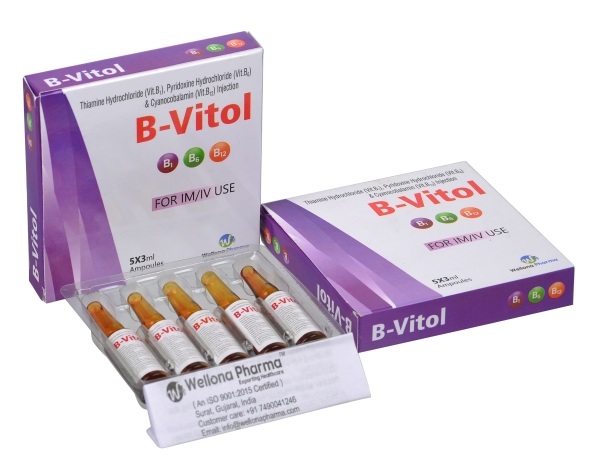
Product image reference: b1 b6 b12 injection
For visual reference, here’s the provided product image:
Common gaps I see with b1 b6 b12 injection suppliers—and how to avoid them
When I’ve reviewed supplier submissions for injectable vitamins, the pattern is consistent. These are the most common gaps and the fixes that reduce risk quickly.
Gap: Weak traceability across raw materials and finished lots
Fix: Require batch-level traceability mapping—raw material lot numbers through to finished product packaging and labeling.
Gap: Stability claims without a clear, buyer-relevant stability plan
Fix: Ask for stability data and the conditions used, plus how they handle out-of-spec stability events.
Gap: Aseptic/sterile process documentation that’s “available” but not decision-ready
Fix: Request an audit-friendly summary: qualification status, media fill/sterility assurance approach, and how deviations are handled.
Gap: Documentation and labeling timelines that don’t match commercial needs
Fix: Put labeling approval and document release milestones into the supply agreement from day one.
What to ask before you sign a supply agreement
To make your selection more objective, use this “pre-contract” question set for b1 b6 b12 injection procurement from a Surat pharmaceutical manufacturing company or pharma supplier/exporter.
- Can you share representative batch documentation for recent lots (with sensitive details appropriately handled)?
- What are your key release tests for b1 b6 b12 injection, and how do you trend them over time?
- What stability data do you have, and how do you determine shelf-life for shipments?
- How do you control aseptic processing and contamination risks?
- What is your confirmed lead time from order to released shipment for export-ready quantities?
- How do you manage change control if formulations, suppliers, or equipment are updated?
FAQ
What should I verify first when sourcing b1 b6 b12 injection?
Start with quality system readiness and batch traceability. Then verify analytical release tests and stability strategy, because these most directly impact repeatable outcomes and shipment approvals.
Is it enough to receive a COA for b1 b6 b12 injection?
A COA is necessary but not sufficient. You should also assess the supplier’s process controls, deviation/CAPA discipline, and consistency across multiple recent batches—especially for injectable multi-component products.
How can a Surat pharma exporter reduce delays for b1 b6 b12 injection orders?
They should align manufacturing release with export documentation workflows and labeling approval timelines, provide clear lead-time commitments, and maintain batch/expiry traceability that’s decision-ready for your QA and logistics teams.
Conclusion: choose the supplier who makes repeatability easy
For b1 b6 b12 injection, strong outcomes depend on more than a single batch release. In practical procurement and QA work, the suppliers that succeed are the ones with disciplined documentation, validated analytical methods, reliable aseptic controls, and export-ready handoffs.
Next step: Request representative recent batch documentation (with traceability), stability data, and your target export labeling/documentation timeline, then score the supplier against the checklist above before committing to volume.
Discussion